COMMITMENT TO SUSTAINABILITY: EXPLORING LOW-EMBODIED CARBON CONCRETE
With the construction industry evolving to meet the challenges of climate change, the need for sustainable alternatives has never been more pressing. By exploring low-embodied carbon options, we are tackling one of the biggest challenges in construction while laying the foundation for a greener future.
Concrete is essential to construction, but it comes with a significant environmental cost. As the second most consumed material on earth, its production contributes substantially to global greenhouse gas emissions. The cement used in concrete accounts for approximately 8 percent of global carbon dioxide emissions, a staggering number that underscores the urgency for change. With the construction industry evolving to meet the challenges of climate change, the need for sustainable alternatives has never been more pressing. By exploring low-embodied carbon options, we are tackling one of the biggest challenges in construction while laying the foundation for a greener future.
THINK
Low-embodied carbon concrete is designed to reduce the carbon emissions generated during production, transportation, and construction. These emissions, known as “embodied carbon,” are tied to the energy-intensive process of creating cement. Addressing embodied carbon is critical because these emissions occur before a building or structure is even used, making them an upfront contributor to climate change.
Working with local suppliers to introduce advanced cement types can help lower emissions without sacrificing performance. One of the materials being adopted is Type 1L cement, which incorporates 5 to 15 percent limestone. This slight adjustment reduces emissions by about 5 percent while maintaining the strength and durability clients expect.
Another material in testing is Type 1P cement, which replaces up to 50 percent of traditional cement with pozzolan. This natural material, often derived from volcanic ash, enhances the performance of concrete while significantly reducing its environmental impact. Type 1P cement shows promise for cutting emissions by as much as 20 percent, making it a key part of the future of low-embodied carbon concrete.
Global Warming Potential (GWP) is the measure used to evaluate these materials. GWP quantifies the impact a material has on the environment in terms of carbon dioxide equivalents, helping us identify solutions that significantly reduce emissions without compromising quality.
“Concrete is such a vital material in construction, but it is also a major contributor to emissions,” said Trent Murray, Director of Concrete Preconstruction. “The work we are doing now will help transform how the industry approaches sustainability.”
WORK
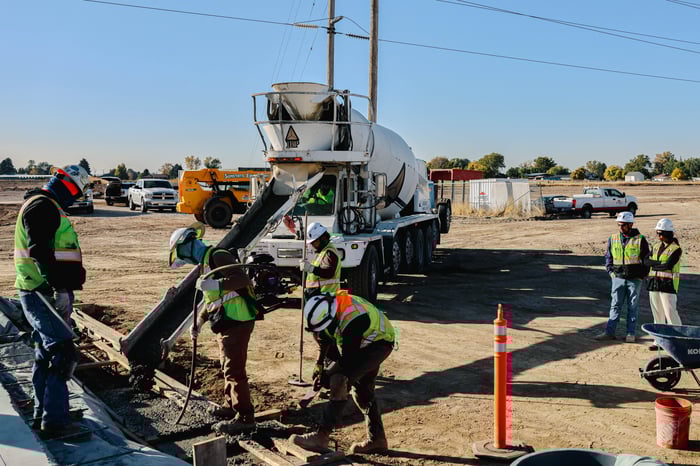
Our journey toward sustainability does not stop with new materials. We are also optimizing concrete mix designs by incorporating supplementary materials like fly ash, slag, and recycled aggregates. Fly ash, a byproduct of coal combustion, and slag, a byproduct of steel production, are both excellent substitutes for a portion of cement in concrete. Recycled aggregates, sourced from crushed concrete and other construction waste, further reduce the environmental footprint of our projects.
These substitutions allow us to use less cement overall, which directly reduces embodied carbon. Every mix undergoes rigorous testing to ensure it meets the highest standards for strength, durability, and safety. The result is concrete that performs just as well as or better than traditional mixes while significantly lowering its impact on the planet.
Concrete production is just one part of the equation. By sourcing materials locally, emissions associated with transporting materials over long distances are reduced. Local sourcing not only supports nearby economies but also minimizes the carbon footprint of our projects.
Advancements in carbon capture technology have the potential to transform the industry. These technologies aim to capture carbon dioxide emissions from industrial processes and either repurpose or store them permanently. Though still in the early stages of adoption, carbon capture could provide an additional tool for reducing the environmental impact of concrete.
“We are in a position to lead by example,” said Nate Rideout, Senior Director of Concrete Operations. “When we show that sustainability and performance can coexist, it changes the conversation. It opens the door for broader acceptance and innovation.”
LIVE
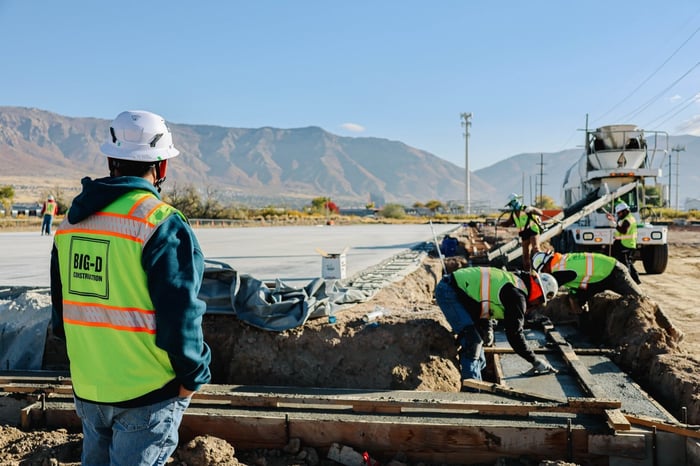
This initiative is about more than materials; it is about rethinking how construction impacts our planet. By embracing sustainable practices, we are helping to reshape the industry and create a culture of innovation and responsibility.
There are challenges, of course. Testing new materials and developing innovative mix designs takes time and resources. Some sustainable materials come with higher upfront costs, which can present budget concerns for projects operating under tight constraints. However, the long-term benefits far outweigh these initial hurdles. Reduced emissions, better resource efficiency, and alignment with future regulatory standards make the case for sustainable concrete solutions stronger than ever.
These challenges are opportunities to innovate. Every project undertaken is a chance to push the boundaries of what's possible, from creating mix designs that use less cement to collaborating with researchers and suppliers on groundbreaking technologies.
The time to act is now. Together, we can reduce emissions, drive innovation, and create lasting solutions. Whether you are a client, supplier, or partner, there is an opportunity to make a difference. Let’s collaborate to ensure that every project built is not only structurally sound but also environmentally responsible.
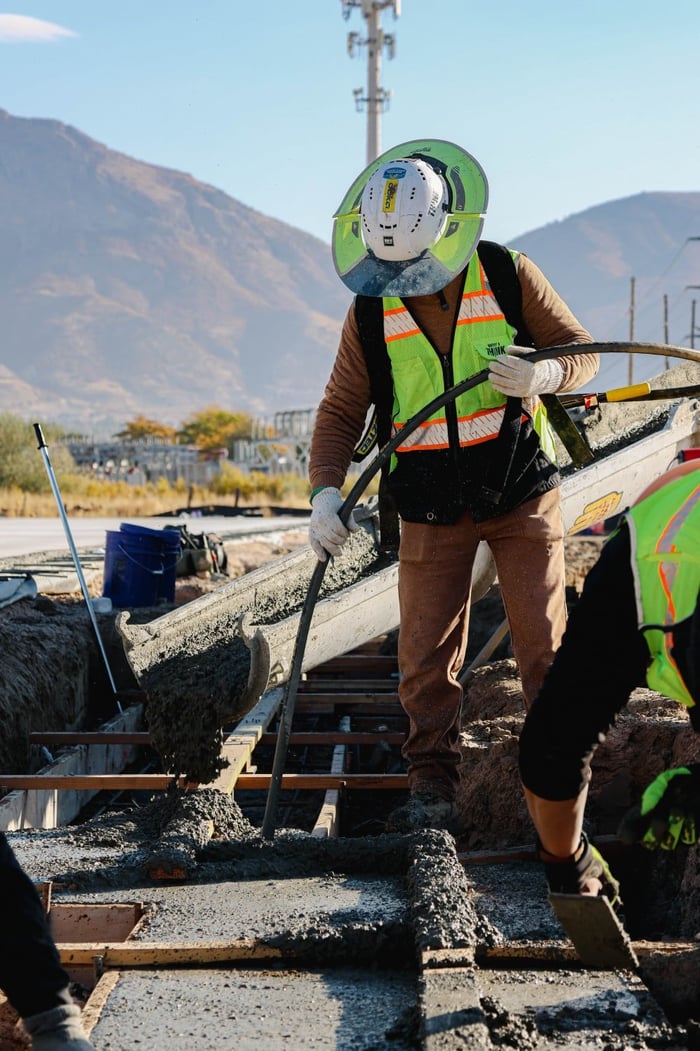
To see some of our team's concrete work, click here.
similar articles
FALL PREVENTION IN CONSTRUCTION: BUILDING A CULTURE OF SAFETY AT BIG-D
May 09, 2025Learn how Big-D Construction is building a safety-first culture through planning, awareness, and leadership during Construction Safety Week and beyond.
FOREIGN OBJECT DEBRIS: A HIDDEN RISK IN AIRPORT CONSTRUCTION
Jun 10, 2025In aviation construction, safety starts with what you don’t see. Discover how Big-D Construction tackles foreign object debris (FOD) in high-stakes aviation projects like the Salt Lake City International Airport.
LAYING THE GROUNDWORK FOR THE NEXT GENERATION IN CONSTRUCTION
Aug 28, 2025Discover how mentorship is transforming the construction industry by closing the experience gap, boosting retention, and shaping tomorrow’s leaders.
MENTAL HEALTH AND WELLNESS IN CONSTRUCTION THE BIG-D WAY
Sep 17, 2025Wellness is foundational to the construction industry—impacting both mental and physical health. At Big-D we are committed to exploring innovative solutions to create a healthier, more supportive work environment for everyone.