FOREIGN OBJECT DEBRIS: A HIDDEN RISK IN AIRPORT CONSTRUCTION
In aviation construction, precision is not optional. Nowhere is that more evident than in how teams manage something many people rarely think about: foreign object debris, or FOD.
FOD refers to any loose item on a jobsite that does not belong. That could mean cardboard, plastic sheeting, roofing underlayment, or even the tiniest foreign object that doesn’t belong on the tarmac. On an airport site, debris can be a safety threat. If a piece of debris crosses the fence line and makes it to an active airfield, the consequences can be immediate and severe.
Since 2014, our teams have played a central role in one of the largest aviation infrastructure projects in the country: the Salt Lake City International Airport Redevelopment Program. With a large part of the construction phases managed to date, including the terminal, concourses, central utility plant, baggage systems, and jet fuel infrastructure, we have built deep expertise in the unique demands of active-airport construction environments.
THINK
FOD is more than a cleanliness issue. It is a mindset. The smallest overlooked item can create the biggest problems. Brent Christiansen, Senior Superintendent at Big-D Construction, recalled a time from an earlier project phase on the Salt Lake City International Airport project, when high winds lifted fencing fabric and blew it toward an active taxiway. Luckily, no FOD made it onto the taxiway.
Moments like these stay with a team. They are reminders that on an airport jobsite, awareness is everything. A discarded piece of plywood, a loose screw, or a single wrapper might seem insignificant until it becomes airborne.
“FOD doesn’t have to be large,” Christiansen said. “Even the smallest item can be sucked into an engine and cause major damage.”
The team treats risk mitigation as part of the planning process.
“We’re watching the weather constantly,” Christiansen said. “We don’t load the roof if we know there’s a storm coming. Obviously, sometimes the schedule is the schedule, but if we can shift things, we do.”
“FOD doesn’t have to be large,” Christiansen said. “Even the smallest item can be sucked into an engine and cause major damage.”
WORK
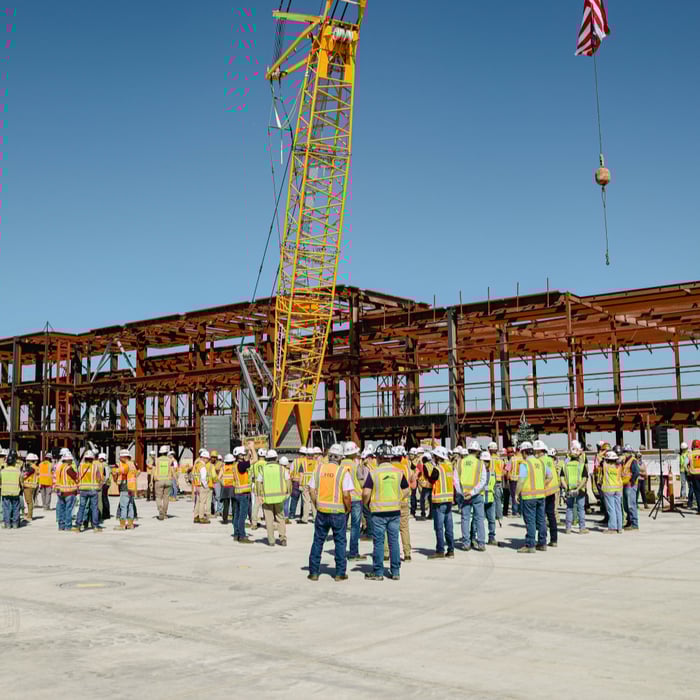
Big-D’s approach to FOD starts with containment. Fencing surrounds the site to keep materials from crossing into airside operations. Within those boundaries, responsibility is shared. Each trade is represented by a composite worker who performs regular walks, daily or even more frequently depending on conditions, to pick up and remove any loose debris.
Roofing materials receive special attention because of their elevated location and potential for lift. Crews have protocols in place for tying down materials and securing tools. When deliveries are scheduled, the team checks weather forecasts and coordinates accordingly. It is a simple principle. If it does not need to be on the roof, it is not going up there, especially on windy days.
Tools and materials are also tightly controlled at ground level.
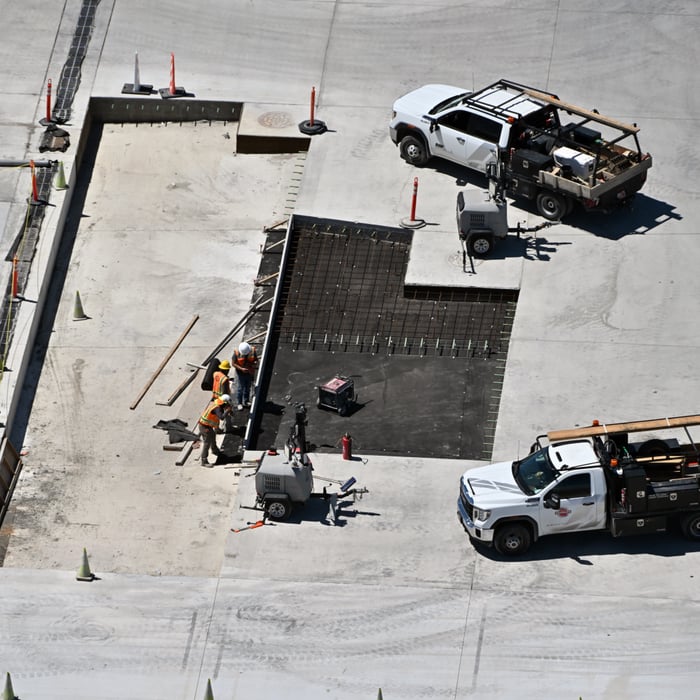
“Everything has to be locked up or removed from the site each day,” said Jordan Cammack, Project Director for Big-D Construction. “That’s a TSA requirement [for airport projects] to ensure we’re on the secure side.”
FOD awareness begins at orientation.
“When you’re working in aviation, it just becomes second nature,” Christiansen said. “But that level of diligence should not be limited to airport projects. We pay the same attention to debris on any job. When you’re building in a downtown area and something flies off a 13-story building, that’s a problem too.”
“Everything has to be locked up or removed from the site each day,” said Jordan Cammack, Project Director for Big-D Construction. “That’s a TSA requirement [for airport projects] to ensure we’re on the secure side.”
LIVE
Preventing FOD is not just about protecting aircraft. It is about creating a culture where everyone takes ownership of their space and responsibility for their surroundings. It is about building right, every time. Weekly safety meetings, daily planning, and crew-to-crew accountability all help drive that message home.
“It’s a huge hazard for all of us,” Christiansen said. “And it’s a risk management issue. If you ignore it, it can make your life miserable pretty quickly. Clean space equals workable space. If we’re not managing that, we can’t get the work done.”
FOD might be hidden in plain sight, but the shared safety-first ethos of Big-D, the Salt Lake City International Airport, and our airport partners ensures it never becomes a disaster.
“It’s a huge hazard for all of us,” Christiansen said. “And it’s a risk management issue. If you ignore it, it can make your life miserable pretty quickly. Clean space equals workable space. If we’re not managing that, we can’t get the work done.”
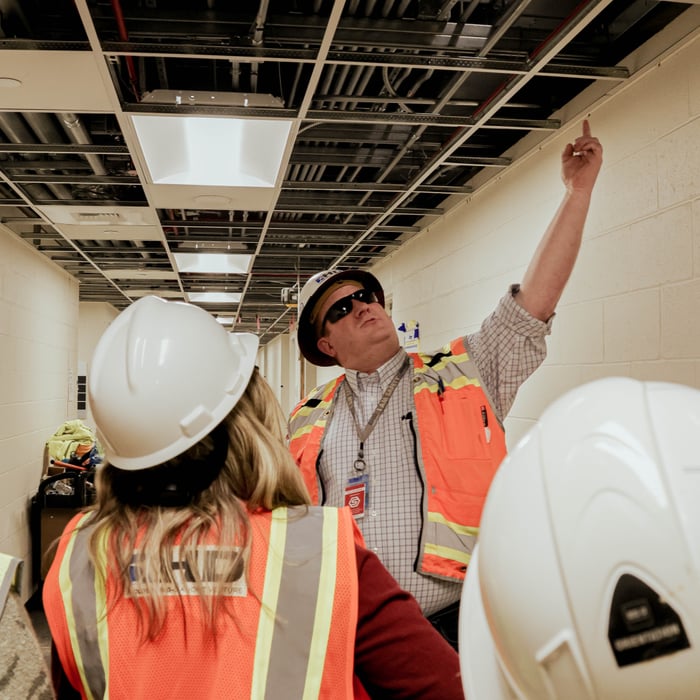
To learn more about the ongoing work that Holder/Big-D Construction Joint Venture (HDJV) is doing at the Salt Lake City International Airport, check out the latest feature from Utah Construction & Design.
similar articles
FALL PREVENTION IN CONSTRUCTION: BUILDING A CULTURE OF SAFETY AT BIG-D
May 09, 2025Learn how Big-D Construction is building a safety-first culture through planning, awareness, and leadership during Construction Safety Week and beyond.
LAYING THE GROUNDWORK FOR THE NEXT GENERATION IN CONSTRUCTION
Aug 28, 2025Discover how mentorship is transforming the construction industry by closing the experience gap, boosting retention, and shaping tomorrow’s leaders.
MENTAL HEALTH AND WELLNESS IN CONSTRUCTION THE BIG-D WAY
Sep 17, 2025Wellness is foundational to the construction industry—impacting both mental and physical health. At Big-D we are committed to exploring innovative solutions to create a healthier, more supportive work environment for everyone.
COMMITMENT TO SUSTAINABILITY: EXPLORING LOW-EMBODIED CARBON CONCRETE
Jan 06, 2025With the construction industry evolving to meet the challenges of climate change, the need for sustainable alternatives has never been more pressing. By exploring low-embodied carbon options, we are tackling one of the biggest challenges in construction while laying the foundation for a greener future.